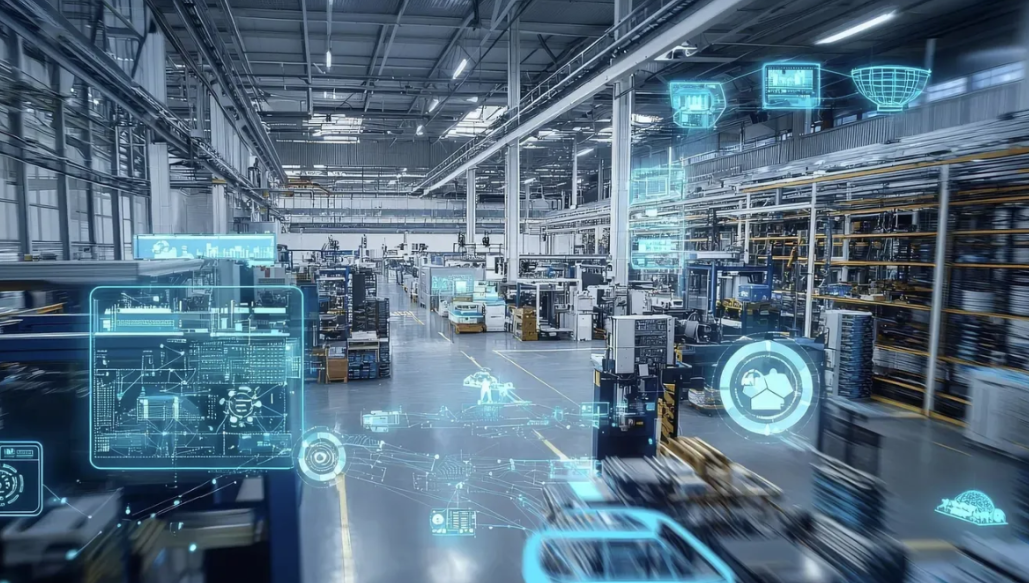

The manufacturing engineering landscape is undergoing a transformation that is fundamentally reshaping how components are designed, machined, and delivered. As we move through 2026, several powerful trends are converging to redefine what is possible in precision manufacturing. From the mainstream adoption of AI-native machining to the growing imperative of reshoring, the industry is shifting decisively toward operations that can sense, decide, and act autonomously.
For engineering leaders and procurement professionals, understanding these trends is essential for making informed decisions about manufacturing partnerships. The shops that have embraced these technologies—particularly in specialized areas like Swiss machining—are positioned to deliver the consistency, quality, and scalability that modern industry demands.
AI-Native Machining Moves from Pilot to Production
Artificial intelligence has moved from experimental pilots to daily production control. In 2026, AI-native machining has gone mainstream. Rather than relying on fixed programs that run the same way regardless of conditions, modern CNC machining centers use real-time sensor feedback to adjust feeds, speeds, and toolpaths automatically in response to vibration, load, or temperature changes.
The impact is measurable. AI delivers significant productivity gains when applied end to end. Operators are shifting from performing manual interventions to managing exceptions and validating system decisions. Engineering teams spend more time refining algorithms, aligning workflows, and validating data quality. This is not incremental improvement—it is a fundamental change in how machining operations are managed.
For precision machining, where tolerances are measured in microns and consistency across thousands of parts is non-negotiable, this shift is transformative. A shop that can detect tool wear through AI-driven condition monitoring and adjust parameters before parts go out of specification delivers higher first-pass yields and lower scrap rates than one that relies on periodic manual inspection.
Digital Twins Become Production Infrastructure
Digital twin technology has evolved from simulation tool to production infrastructure. In 2026, digital twins are no longer optional—they are integrated into the daily workflow of leading precision machining facilities. These virtual replicas of physical machines and processes enable engineers to simulate machining operations before the first chip is cut, identifying potential problems and optimizing parameters without interrupting production.
When the physical machine runs, sensors feed data back to the digital twin, creating a continuous learning loop. The virtual model becomes more accurate over time, enabling better predictions and more refined optimization. For complex components—such as aerospace structural parts or medical implants—this capability is invaluable. It reduces development time, minimizes trial-and-error, and ensures that production processes are right the first time.\
See also: The Evolution of Technical Writing: Sourcing Specialized Content Expertise in the US Biotech Sector
Automation Closes the Labor Gap
The persistent shortage of skilled machinists has made automation a business imperative rather than a choice. Precision machining consistently ranks among the hardest positions to fill because the trade requires years of on-the-job mentoring. As experienced workers retire, the gap between available work and available workforce widens.
Automation offers a practical response. Robot-tended CNC cells, automated pallet changers, and self-calibrating tool presetters reduce the need for manual intervention on routine tasks. Lights-out machining—unattended production supported by smart scheduling and remote monitoring—enables shops to run around the clock with minimal staffing. AI-powered CAM software simplifies programming, enabling less experienced operators to produce complex parts.
For business leaders, the math is straightforward: automation closes the labor gap while improving consistency and throughput. The shops that have invested in these technologies are better positioned to capture demand, maintain quality, and grow their businesses.
The Reshoring Momentum Accelerates
The reshoring and supply chain diversification trends that gained momentum in recent years have become structural realities. Companies across North America and Europe are actively bringing production closer to end markets, driven by concerns about supply chain resilience, trade uncertainty, and the rising cost of distant sourcing.
However, the industry faces a persistent challenge: a shortage of skilled machinists. Precision machining consistently ranks among the hardest positions to fill because the trade requires years of on-the-job mentoring. Falcon CNC Swiss has addressed this challenge through sustained investment in workforce development, documented training programs, and automation that reduces reliance on manual intervention for routine tasks.
The Swiss Machining Advantage in an Automated World
Among precision machining technologies, Swiss-type turning is uniquely positioned for the Industry 4.0 environment. Originally developed for watchmaking, Swiss machines feed material through a guide bushing positioned immediately next to the cutting tool. This design eliminates deflection and vibration, making it possible to hold tolerances that other machines cannot achieve consistently.
In a smart factory, this mechanical stability becomes the foundation for reliable automation. Swiss machines with automated bar feeders and robotic part handling can run unattended for extended periods. In-process probing verifies dimensions between cycles, allowing the machine to compensate for tool wear without operator intervention. For high-value components in medical, aerospace, and electronics applications, this level of automation is essential.
Modern Swiss machining centers integrate turning, milling, drilling, and threading in a single setup—often on machines with five to nine axes. This “done-in-one” approach reduces handling errors, shortens production cycles, and ensures that critical features stay aligned. For engineers designing complex components, a provider with precision Swiss machining services brings the advanced capabilities needed to turn ambitious designs into reliable products.
The Reshoring Reality
The reshoring trend continues to reshape industrial sourcing. Companies are bringing production closer to end markets, but they are discovering that domestic capacity for high-precision Swiss machining is not unlimited. The shops that have invested in advanced equipment, skilled workforces, and documented material processes are the ones capturing the most demanding programs.
For procurement professionals, the assessment criteria have sharpened accordingly. Equipment matters: multi-axis CNC turning centers with live tooling, automated bar feeders, and in-process probing are now the baseline for serious work. Quality infrastructure matters: certifications and traceability systems provide the audit trail that regulated industries require. Material experience matters: a shop that has produced tens of thousands of components across different alloys understands the subtle behaviors that separate reliable production from costly scrap.
Sustainability and Material Efficiency
Sustainability has moved from corporate reporting to operational reality. Manufacturers are under increasing pressure to reduce waste, energy consumption, and environmental impact. For precision machining, this means optimizing processes to minimize scrap, extend tool life, and reduce coolant usage.
Swiss machining, with its ability to produce complete components in a single setup, inherently reduces material waste and energy consumption compared to processes that require multiple setups and external operations. The guide bushing support minimizes tool deflection, extending tool life and reducing the frequency of tool changes.
A Swiss machine shop that has invested in modern equipment and documented processes delivers not just precision but efficiency. The combination of advanced technology, skilled operators, and rigorous quality control ensures that components are produced right the first time, eliminating the waste of rework and scrap.
Looking Ahead
The engineering manufacturing trends of 2026 point toward a future defined by autonomy, connectivity, and resilience. The shops that have embraced AI-native machining, digital twins, and automation are positioned to capture the most demanding programs. The companies that partner with them early will be better equipped to handle product complexity, respond to demand fluctuations, and navigate trade uncertainty.
For manufacturers, the question is not whether to invest in these technologies—it is how quickly they can position themselves to capture the growing demand. The technology required to meet today’s specifications is well understood, but it requires sustained capital investment, documented process knowledge, and a skilled workforce.
In an era where every component matters, the distinction between commodity suppliers and strategic partners has never been more important. The right manufacturing partner brings not just equipment but decades of accumulated knowledge about how materials behave under cutting forces. That knowledge translates directly to consistency, reliability, and peace of mind—the foundation of lasting business advantage.