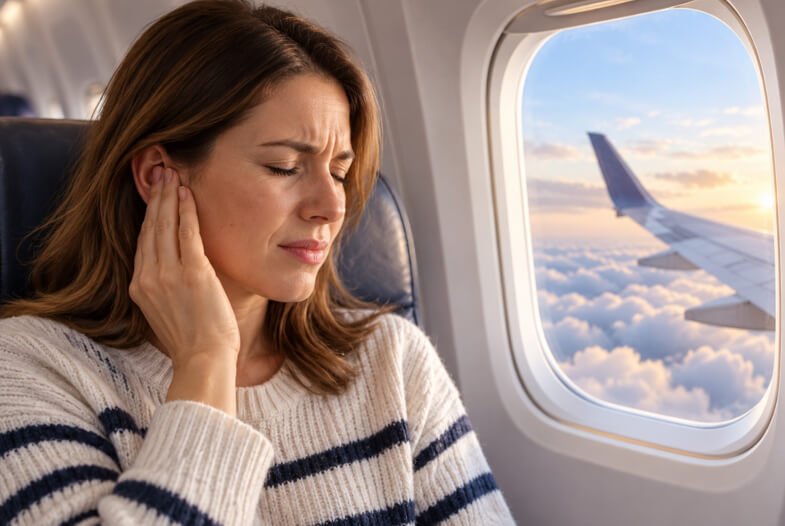

Ever notice how your ears feel strange the moment a plane starts its descent? That muffled, underwater sensation isn’t just annoying, it’s actually your body responding to a rapid shift in air pressure. For most people, it clears up with a yawn or two. But if you already struggle with your hearing, cabin pressure changes can make things a lot more uncomfortable, and sometimes even affect how well your hearing devices perform. This is where a yeasound hearing aid can make a real difference, since they’re built to handle exactly this kind of unpredictable acoustic environment.
So what’s actually going on up there? When a plane climbs, the air pressure outside the cabin drops fast. Your middle ear, which is normally in balance with the air pressure around you, suddenly has more pressure on the inside than the outside. That’s what causes the popping, the fullness, and sometimes a dull ache. It’s your eustachian tube trying to catch up and equalize things. For people wearing hearing aids, this pressure swing can also shift how sound reaches the eardrum, which is one reason some users report their devices sounding off during a flight. Well designed noise cancelling hearing aids are engineered with this kind of variability in mind, so the listening experience stays more consistent even when the environment isn’t.
Why Your Ears React the Way They Do
The middle ear is basically a small air-filled chamber sitting behind your eardrum. It relies on the eustachian tube, a narrow passage connecting it to the back of your throat, to keep pressure balanced with the outside world. On the ground, this happens automatically and you barely notice it. But planes climb and descend faster than your body is really built for, so the tube can’t always keep pace. That mismatch is what you feel as pressure, popping, or in some cases mild pain.
If you already have any degree of hearing loss, this pressure imbalance can feel more pronounced. Some people describe a temporary dip in clarity, almost like turning the volume down without meaning to. It usually passes once you’re back on the ground, but it can be a frustrating few hours in between.
What Actually Helps During a Flight
There are a handful of tricks that genuinely work, and most of them cost nothing. Swallowing, yawning, or chewing gum encourages the eustachian tube to open and close, which helps equalize pressure naturally. The old trick of pinching your nose and gently blowing (known as the Valsalva maneuver) works too, though you don’t want to overdo it since too much force can actually cause discomfort rather than relieve it.
Staying hydrated matters more than people realize. Dry cabin air can make your eustachian tubes and nasal passages less flexible, so drinking water throughout the flight keeps things moving more smoothly. If you’re prone to congestion, taking a decongestant about half an hour before takeoff can also make a noticeable difference, though it’s worth checking with a doctor if you fly often and rely on this regularly.
See also: Executive Branding Through PR: Building Influence, Not Fame
Hearing Aids and Air Travel
For hearing aid wearers, flights bring an extra layer of complexity. Engine noise, cabin hum, and the general chaos of an airport already ask a lot of your devices. Add pressure changes into the mix and it’s easy to see why some people just take their hearing aids out during takeoff and landing. That’s a reasonable short-term fix, but it isn’t always practical, especially if you rely on your hearing aids to hear announcements or communicate with cabin crew.
Modern devices have come a long way in handling these conditions. Features that filter out background noise while still picking up speech tend to perform noticeably better in the unpredictable soundscape of a cabin. It’s not about eliminating every sound, that would actually make things less safe, it’s about helping your brain sort through what matters and what doesn’t.
A Few Small Habits That Add Up
Beyond the in-flight basics, there are a couple of things worth doing before you even board. Getting a hearing check before a big trip isn’t a bad idea, particularly if you haven’t had one in a while. It’s also worth packing any cleaning tools or spare batteries your devices need, since airport pharmacies rarely stock hearing aid specific supplies.
If turbulence or pressure changes tend to hit you hard, try to avoid falling asleep during the actual descent. Waking up mid-descent, when the pressure is changing fastest, tends to be the worst possible timing for your ears.
Cabin pressure isn’t something you can control, but how you respond to it is. Small habits like swallowing more often, staying hydrated, and choosing hearing technology that’s built for changing environments can make a real difference in how comfortable your next flight feels. Your ears, and your ability to actually enjoy the trip, will thank you for it.